

Moroccan Articles and News
Making a Mosaic Table

30
Apr
The process of making Moroccan ceramic mosaic tables is complex and carried out by several professionals, each specialising in an individual part of the process. Zellige or Mosaic is tile work made from individually chiselled tiles set into a plaster base. This form of Islamic art is one of the main characteristics of Berber and Moroccan architecture. It consists of geometrically patterned mosaics, used to ornament walls, ceilings, fountains, floors, pools and of course tables. The first step is the production of the tiles. Clay is mixed with water and left to stabilise for 24 hours. Next day the mixture is purified from foreign elements and kneaded using both the hands and feet until it is pliable, it is flattened to an even thickness of about 1cm. The Moroccan Artisan Board requires that zellige tiles are made from pure clay and not mixed with lime or iron as these are detrimental to the quality of the tile.

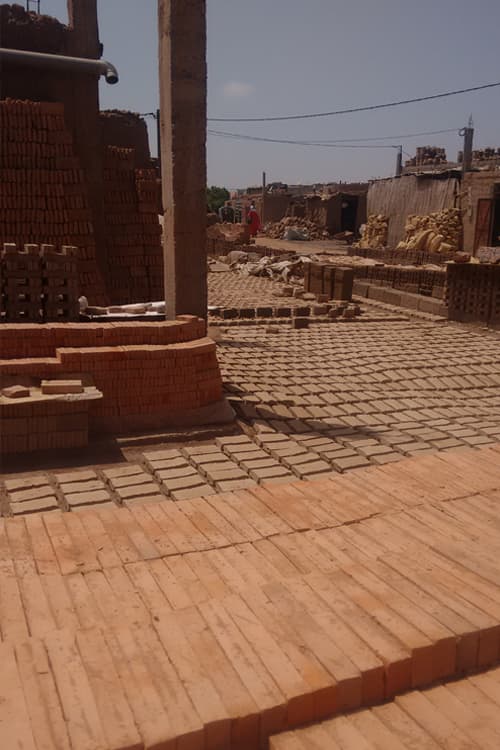


The clay is then cut into squares and placed in the sun to dry. These squares are then placed in an oven for their first baking. Glazes of different colours are made from tin, zinc and copper. The tiles are dipped into the glaze and they are baked for the second time at 800°c. The tiles are placed at different levels according to their intended colours and the degree of heat required to attain those colours.

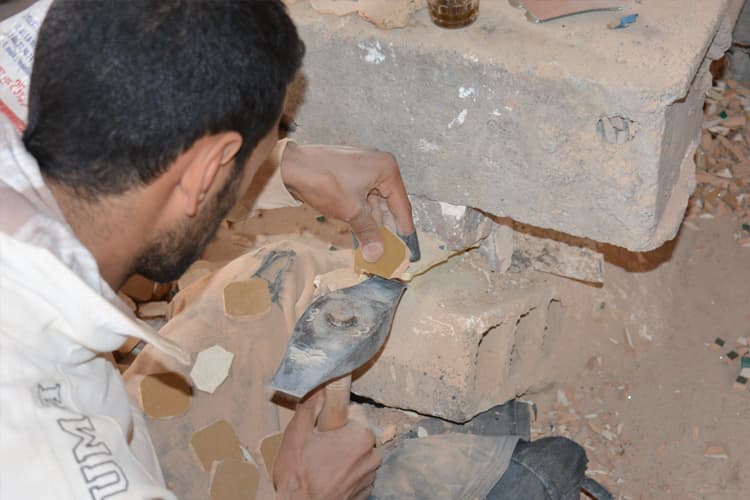
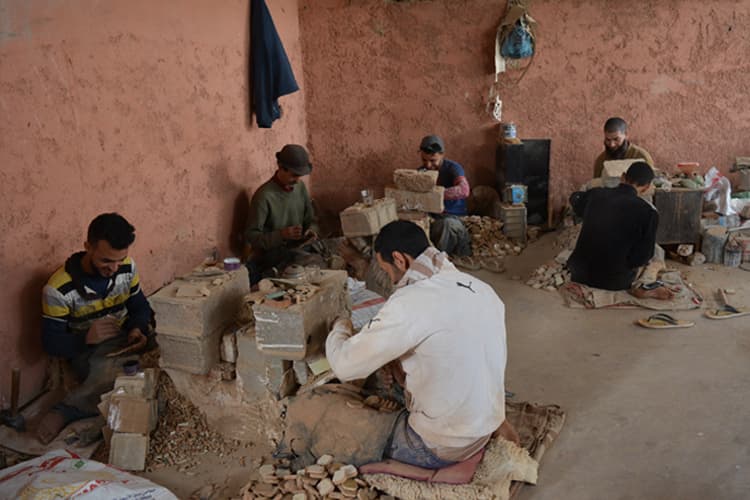
After the tiles are removed from the oven, they are passed to the “rasham” who draws the shapes of the patterns to be used in a design directly onto the tiles. The patterns on each tile are tessellated (fitted together without any gaps) in order to use the surface most efficiently. The tiles are then sent to the “naqqash” or cutter who cuts each tile using a wide hammer sharpened at each end. The “khalla” or finisher trims the edges and makes sure that the tile meets the requirements for production. They are then ready to be made into the table. The tables are are made my master craftsmen called maâlems. The tables are made upside down.

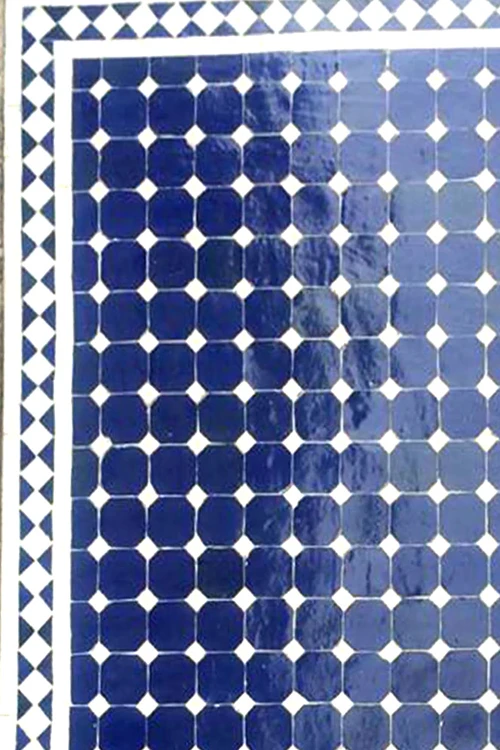
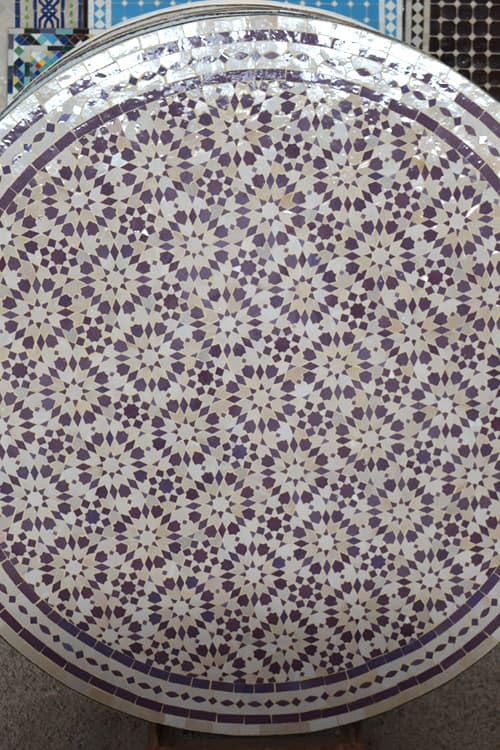
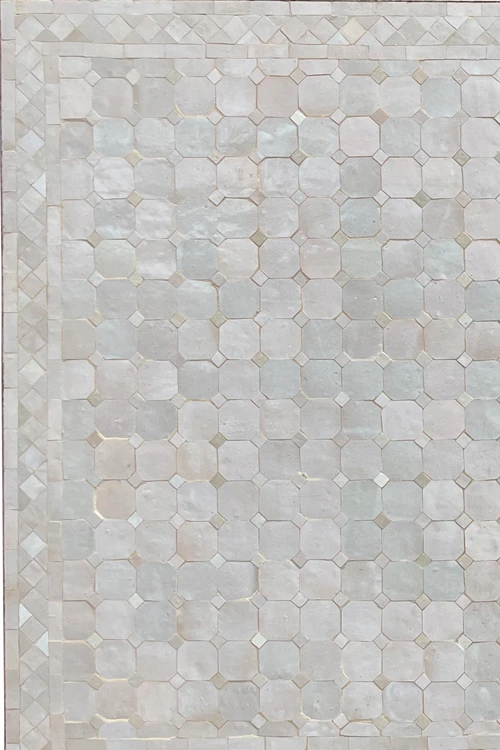
A metal frame is used and each piece of mosaic is individually placed topside down in the frame piece by piece the intricate geometric pattern is formed. When the pattern is complete concrete is poured into the frame and left to set. When the concrete is dry the table is turned over and grouted.
