


Caring for your table or fountain
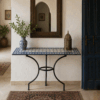
Moroccan mosaic tables and fountains are admired for their authentic, rustic charm — a direct result of the traditional craftsmanship and natural materials used in their creation. Each piece is handmade by artisans, using methods passed down through generations.
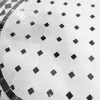
The zellige tiles are hand glazed, individually cut into small pieces, assembled into intricate patterns, set in poured concrete and fired in a wood kiln. Because this process is entirely manual, subtle irregularities in shape, colour, and surface texture naturally occur. These variations — slight unevenness, tiny gaps, or minor imperfections — are not flaws but hallmarks of genuine artisan work.
Lines or small cracks can appear on the underside of concrete table top as it sets and shrinks. This is normal and does not affect the strength or stability of the base, which is reinforced concrete—concrete strengthened with internal steel bars.
The base is typically made from hand-forged metal, adding to the table’s robust and organic appeal. The materials develop a soft patina that enhances the character, telling the story of its craftsmanship and use.
A Moroccan mosaic table or fountain is not a factory-made, mass-produced item — it’s a unique, living piece of art, full of warmth, texture, and individuality. Its rustic beauty lies in its imperfection, authenticity, and the human touch behind every tile. We recomend retaining its rustic charm with some basic maintenance.
Protect your metal:
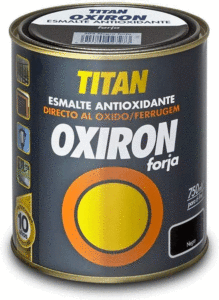
As standard the tables, fountains and chairs are shipped with black Oxiron weatherproof paint. The paint provides a durable, corrosion-resistant low-gloss coating. It is specially formulated to form a tough barrier that resists knocks and scratches, protecting your metalwork and maintaining a beautiful finish for longer.
The paint comes in standard black.
To maintain the metalwork over time any rust can be treated with the same product which will provide 8-10 years of protection.
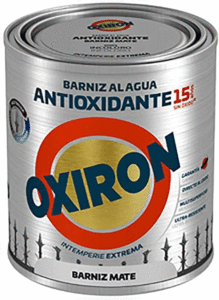
In Morocco metal work is typically painted with local matt black paint which over time rusts to create the rustic look seen throughout the country. If you wish to retain this look, please inform us at the point of order. To protect your metalwork but retain this aged look we suggest painting it with a clear varnish one to two years after purchase.
If you want a different colour or a gloss finish try the Hammerite range.
All are easily available.

To further protect delicate surfaces you may wish to add rubber pads to the iron feet. These can be purchased at any Chinese bazar or ferreteria.
Protecting your Mosaic
Mosaic tables are hardwearing and low maintenance. The Zellige tiles are resistant to sun and rain. They may develop mild oxidation over time, which is a natural result of traditional craftsmanship and breathable materials. The tiles, mortars and concrete are designed to age organically, and this does not affect the table’s strength or quality. Rather than a defect, it is a sign of authenticity and handcrafted character rooted in centuries-old techniques
If the table or fountain is likely to be exposed to sub-zero temperatures for an extended period during winter, or to extreme low temperatures, it must be protected with a waterproof cover.
The use of a waterproof cover helps prevent rain or snow from saturating the surface prior to freezing conditions, thereby keeping the tiles drier and removing the risk of freeze–thaw damage during prolonged or severe sub-zero weather.
If any grout becomes loose, it should be carefully removed using a grout removal tool or an old screwdriver before being replaced with fresh grout. This will help prevent moisture from penetrating the table’s base and extend its lifespan.
We recommend checking the mosaic and grout upon delivery, as some grout may loosen during transit.
Oxidation may occur as a natural reaction to environmental conditions. This is purely cosmetic and will not affect the structural integrity of the table or cause any damage.
To retain this look while preventing any transfer onto clothing, you may wish to apply a clear, matt varnish every few years. Or any oxidation, or stubborn stains can be removed with an alcohol solution, or a pH-neutral cleaner.
Taking these steps to protect and maintain your metalwork and tiles will allow your table to grow old gracefully over many years.
| Size | Dining table oblong, Dining table round, Small Table, Chair(1), Arm Chair(1), Daybed |
|---|
Related products
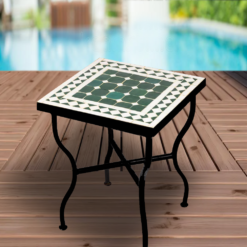
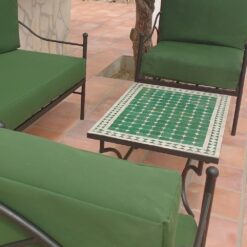
Moroccan Mosaics
Price range: €234 through €722
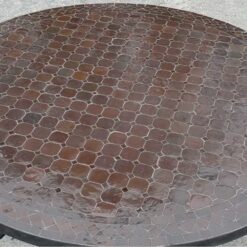
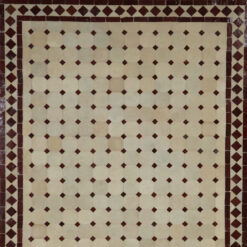
Moroccan Mosaics
Price range: €129 through €604

Moroccan Mosaics
Price range: €129 through €1,002


Modern Moroccan Artisan Furniture
Price range: €234 through €868


Moroccan Mosaics
Price range: €403 through €1,216

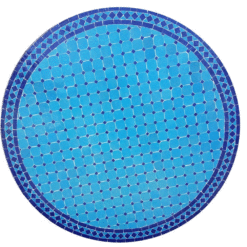
Moroccan Mosaics
Price range: €353 through €868
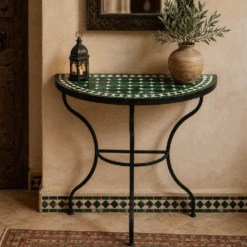
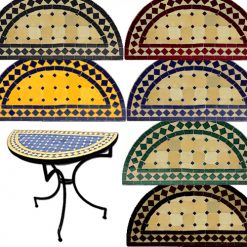
Eclectic Occasional Furniture
Price range: €247 through €339

Moroccan Mosaics
Price range: €469 through €1,216
